A Homeowner’s Guide
To Choosing the Right Contractor for Your Remodel or Renovation
Choosing a residential renovation contractor is a major decision that affects both your finances and your peace of mind. Your home is more than a structure—it is likely your largest investment and the place where your daily life unfolds. That makes careful research essential before allowing anyone to begin work.
This guide helps homeowners identify the key qualities of a dependable remodeling contractor. Understanding the right credentials, protections, and communication practices can help you choose a company that is ready to manage your project with confidence and care.
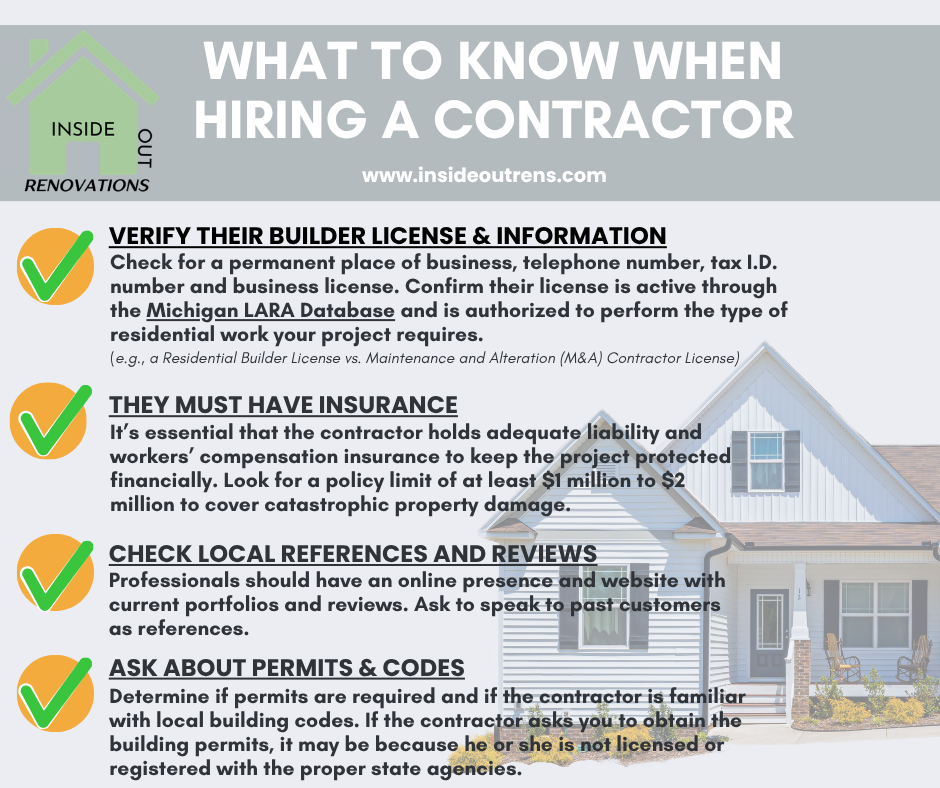
1. Proper State Licensing and Registration A reputable contractor should be properly licensed and registered to perform residential work in your area.
Active State Licensing: Ask for the contractor’s Builder License’s number and confirm that it is active through your state’s licensing portal, such as the Michigan LARA database. This helps confirm that the company is authorized to perform the type of residential work your project requires (e.g., a residential builder license vs. a restricted specialty license).
No Unresolved Complaints: Check the licensing board for any history of disciplinary actions, unresolved consumer complaints, or legal violations.
2. Comprehensive Insurance Coverage Never allow a contractor on your property without proof of adequate insurance. Ask for their Certificate of Insurance (COI).
General Liability Insurance: This coverage helps protect your home and property in the unlikely event that damage occurs during the renovation process. Look for a policy limit of at least $1 million to $2 million to cover catastrophic property damage.
Workers’ Compensation: This covers medical expenses and lost wages if a laborer is injured on your property. Without it, you could be held financially liable for workplace accidents.
3. Specialized Renovation Experience Not all construction experience is equal. A commercial builder might struggle with the nuances of an older residential home.
Relevant Project Experience: Look for a team with experience in the type of project you are planning, whether that is a kitchen remodel, bathroom renovation, home addition, basement finish, or structural layout update.
Local Code Expertise: A seasoned local contractor will understand local zoning laws, structural codes, and the exact permitting processes required by your municipality.
4. Local References and Customer Feedback Reviews and referrals are valuable because they show how a contractor performs beyond the initial estimate.
Recent Client References: Ask to hear from recent clients with similar projects so you can better understand the company’s workmanship, communication style, cleanliness, and overall project experience.

The best renovation experiences come from a partnership built on trust, transparency, craftsmanship, and communication. When homeowners know what to look for, they can choose a contractor with confidence and begin their project with a clearer sense of what to expect.